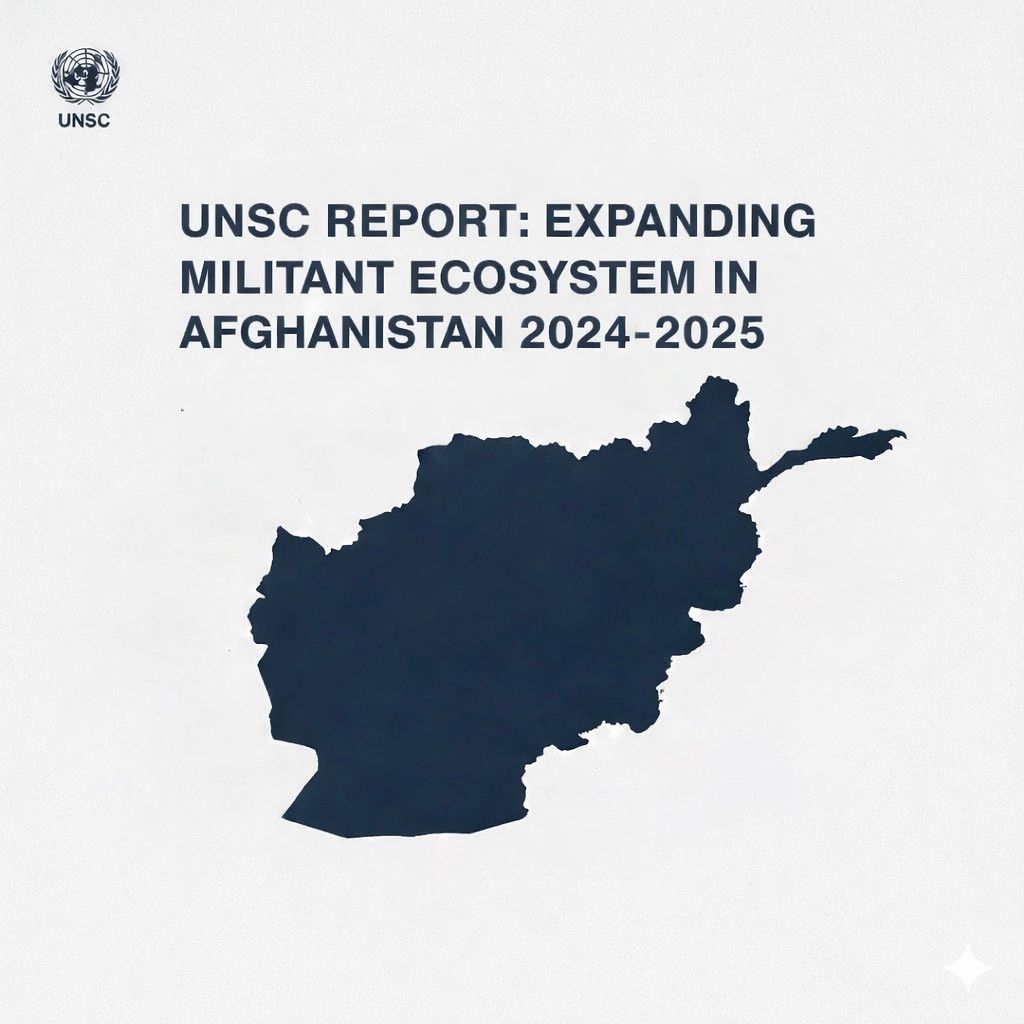
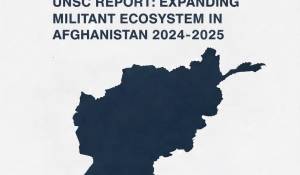
The latest report by the 37th issue of
United Nations Security Council’s Analytical Support and Sanctions Monitoring
Team pursuant to resolutions 1526 (2004) and 2253 (2015) has raised serious
concerns and a daunting imagery over the growing militant ecosystem in
Afghanistan, warning that the presence of multiple armed groups continues to
threaten regional stability through cross-border attacks, radicalization, and
evolving militant alliances.
The report notes that regional countries
remain deeply concerned about militant safe havens inside Afghanistan. It
states that “regional countries remained concerned about the number of
terrorist groups in Afghanistan and its spillover effects, including
cross-border attacks and the radicalization of vulnerable domestic
communities.”
The Monitoring Team further revealed that
the Afghan Taliban’s claim that no terrorist organizations operate within its
borders has found no international backing, stating that “no Member State
supported this view.”
Rising TTP threat
Among the most pressing concerns
highlighted in the report is the strengthening presence of Tehrik-e-Taliban
Pakistan (TTP).
The Monitoring Team states that the group
has been granted greater operational space and “support from the Afghan de
facto authorities,” which has contributed to an increase in attacks inside
Pakistan and heightened regional tensions.
The report describes TTP as one of the
largest militant organizations operating from Afghan territory, noting that its
attacks have become more sophisticated and increasingly involve large numbers
of fighters. It also highlights TTP’s evolving targeting strategy, referencing
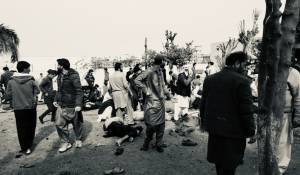
high-profile incidents such as an attack on an Islamabad courthouse, marking a
rare strike in Pakistan’s capital.
Member States have also expressed concern
over the potential expansion of cooperation between TTP and Al-Qaida-aligned
networks, warning that such coordination could elevate the threat beyond South
Asia and transform it into a broader international security challenge.
Al-Qaida’s influence
Despite global counter-terrorism campaigns,
the report suggests that Al-Qaida remains deeply entrenched within
Afghanistan’s militant landscape. The group continues to enjoy what the report
describes as “patronage of the de facto authorities,” while functioning as a
“service provider and multiplier for other terrorist groups… principally to
TTP.”
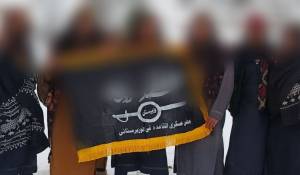
It highlighted the continued presence of
Al-Qaida in the Indian Subcontinent (AQIS), which remains active in
southeastern Afghanistan. Intelligence assessments suggest that AQIS leadership
is operating from Kabul while its media infrastructure functions from Herat,
the report stated, adding that officials
are increasingly “concerned” that the group may be shifting toward covert
external operations designed to remain deniable while maintaining operational
effectiveness.
ISKP as a resilient threat
The Islamic State Khorasan Province (ISKP)
has faced sustained pressure from regional security operations and Taliban
military campaigns, leading to a decline in the number of attacks. However, the
report warns that the group continues to retain “significant operational and
combat capability.”
ISKP has expanded online recruitment
networks and intensified propaganda efforts, particularly targeting Central
Asian audiences through local-language outreach. The group is also reportedly
exploiting global conflicts, including the Gaza war, to attract recruits and
funding.
Security officials remain particularly
alarmed by ISKP’s attempts to establish “sleeper cells” in Central Asian
countries and its efforts to build alliances with other militant factions
across Afghanistan.
Expanding Network of Armed Groups
The report also highlights the presence of
several additional militant organizations contributing to regional instability.
Fighters linked to the East Turkestan Islamic Movement/Turkistan Islamic Party
(ETIM/TIP) are reportedly moving freely within Afghanistan, raising funds
through mining and narcotics networks while integrating into Taliban-controlled
security structures.
Jaish-e-Mohammed (JeM) is also referenced
in the report, with some Member States linking the group to attacks in India
and noting its efforts to expand operational capabilities, including the
creation of a women’s wing aimed at supporting militant activities.
Meanwhile, the Baloch Liberation Army (BLA)
continues to conduct attacks targeting Pakistani security forces and
infrastructure linked to the China-Pakistan Economic Corridor (CPEC). Some
Member States have reported collaboration between BLA, TTP, and ISKP through
shared training facilities, resources, and coordinated operations. However,
intelligence assessments remain divided over whether BLA maintains ideological
or operational links with global jihadist organizations such as Al-Qaida or
ISIL.
Repercussions:
Beyond Afghanistan and Pakistan, the report
warns that militant networks are increasingly interconnected, creating a
complex and evolving security landscape across Central, South, and Southeast
Asia.
Militants are adapting to counter-terrorism
pressure by shifting tactics, strengthening alliances, exploiting digital
platforms, and recruiting younger followers.
The Monitoring Team concludes that while
certain militant groups have suffered operational setbacks, the broader
extremist ecosystem across the region remains resilient and continues to
evolve, presenting a long-term challenge for regional and international
security.