Beyond “Atrocity Narratives”
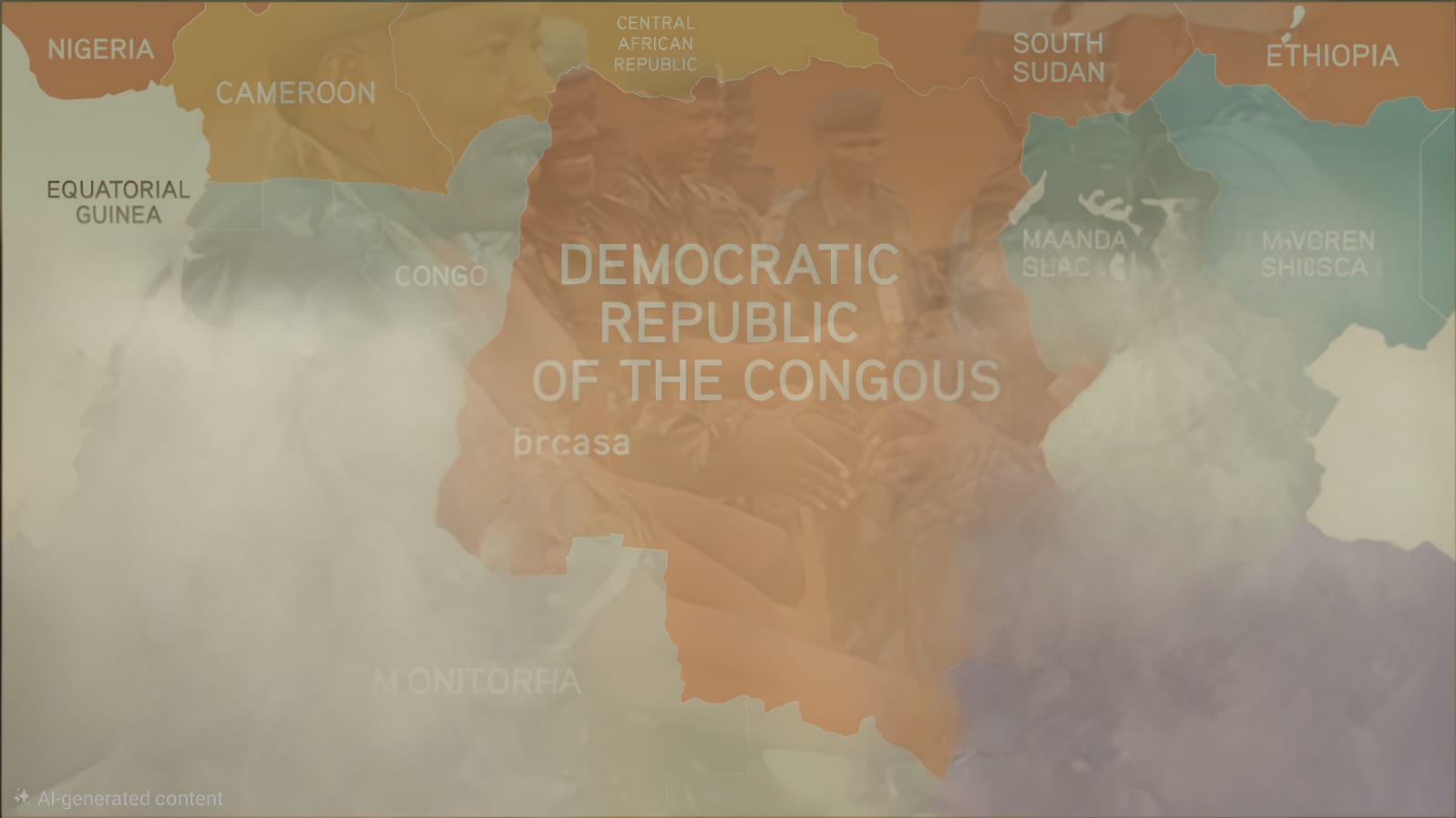
Analytical treatments of violence in the eastern Democratic Republic of Congo have often defaulted to descriptive accounts of brutality, emphasizing the scale of atrocities without sufficiently interrogating their operational logic. This framing obscures the strategic utility of violence as employed by the Islamic State Central Africa Province, particularly its Congolese component rooted in the former Allied Democratic Forces network.
The pattern of recurrent massacres across North Kivu and Ituri demonstrates a deliberate strategy, emphasizing the importance of understanding violence as instrumental for security planning and policy decisions.
This analysis argues that ISCAP’s model in the eastern DRC employs episodic, high-intensity mass killing as a force multiplier to compensate for limited conventional capabilities. Massacres operate as tools of demographic engineering, coercive signaling, and operational insulation, enabling the group to sustain influence across contested rural zones despite sustained military pressure.
ISCAP in Eastern Congo: Organizational Evolution
The organizational trajectory from the Allied Democratic Forces to ISCAP represents more than a nominal rebranding. The affiliation formalized a process of ideological consolidation, external validation, and adaptive operational learning.
The ADF has historically functioned as a localized insurgent actor with hybrid motivations, including political grievances, criminal revenue generation, and religious radicalization. Its pledge of allegiance to the Islamic State marked a transition toward integration within a transnational jihadist ecosystem. This integration did not imply direct command and control from the Islamic State core, but rather alignment within a franchise architecture characterized by branding, media amplification, and selective doctrinal diffusion.
The resulting entity operates as a semi-autonomous node within the broader Islamic State's global structure. The Congolese theater provides strategic utility by demonstrating geographic reach, sustaining propaganda output, and maintaining the perception of organizational vitality despite territorial losses in Iraq and Syria. Within the eastern DRC, ISCAP retains a dispersed operational footprint concentrated in forested areas of North Kivu and Ituri, leveraging terrain complexity to sustain mobility and concealment.
The organization’s structure appears decentralized at the tactical level, relying on small assault elements capable of rapid movement. Leadership cohesion is maintained through ideological indoctrination, coercive discipline, and the circulation of operational directives that emphasize both lethality and unpredictability.
Escalation in Operational Tempo: A Quantitative Signal of Strategic Momentum
Between 23 January and 10 February, ISCAP conducted approximately 26 attacks across North Kivu and Ituri, a marked increase in operational tempo. This concentration indicates not just confidence but also the presence of secure movement corridors, sufficient manpower, and logistical continuity. Understanding this tempo as a sign of strategic momentum helps security stakeholders gauge insurgent resilience and growth potential.
Such tempo indicates three structural conditions. First, the insurgency retains secure movement corridors and fallback zones. Second, it has operational manpower capacity to rotate assault elements without operational exhaustion. Third, it is not experiencing sustained attritional pressure that could degrade its strike capacity.
An insurgent organization under strategic strain does not generate 26 attacks in under three weeks across a dispersed geographic area. It conserves, regroups, or shifts into survival mode. ISCAP instead demonstrated the ability to project simultaneous or sequential violence across different territories, suggesting growth in force size, recruitment inflow, or the efficiency of small-unit deployment.
When read alongside reports that eastern Congo remains one of the most active Islamic State theaters globally, this tempo underscores the critical need for proactive measures, highlighting ISCAP’s ongoing expansion and strategic momentum.
The Operational Pattern of Mass Violence
The recurring massacres attributed to ISCAP display identifiable operational patterns that suggest doctrinal consistency. Target selection prioritizes vulnerable rural communities with limited defensive capacity, often located along secondary movement corridors or adjacent to forest sanctuaries used by insurgent elements.
Attacks frequently occur during hours of reduced vigilance, particularly at night or during communal gatherings such as religious services, funerals, or market events. The use of small arms combined with bladed weapons reflects both logistical constraints and a deliberate attempt to maximize psychological shock while minimizing signature exposure that could attract a rapid military response.
Operational execution typically involves swift ingress, concentrated violence against noncombatants, destruction of property, and rapid withdrawal. These raids rarely attempt to hold terrain in the immediate aftermath. Instead, the objective appears to be cumulative destabilization rather than immediate occupation.
This pattern produces repeated cycles of displacement, undermining local resilience and preventing the reconstitution of stable governance. The absence of prolonged engagements reduces insurgent exposure to superior firepower while sustaining a constant atmosphere of insecurity.
Targeting Christian Communities: Identity as Operational Lever
The deliberate targeting of Christian villages and religious infrastructure must be treated analytically, not rhetorically. Entire Christian villages have been burned, homes torched, churches destroyed, and civilians massacred. The repeated selection of churches as attack sites indicates doctrinal intentionality rather than incidental overlap. The destruction of churches has at least four operational purposes.
First, it attacks communal cohesion. In rural eastern Congo, churches are not only religious sites but also organizational nodes. Destroying them fractures social coordination and collective resilience.
Second, it accelerates displacement. Attacking a church during a vigil or destroying multiple Christian villages creates immediate panic migration. Displacement empties contested terrain and undermines local agricultural and economic stability.
Third, it generates high symbolic value for propaganda. Burning churches and executing Christian civilians allows ISCAP to frame the conflict in explicitly religious terms, aligning local violence with the broader Islamic State narrative of war against “Crusaders” or Christian adversaries.
Fourth, it increases media amplification. International coverage disproportionately highlights attacks on religious gatherings, multiplying the psychological effect far beyond the immediate geographic area.
This pattern is consistent with the Islamic State's global communication strategy, where sectarian framing is used to radicalize supporters, intimidate opponents, and polarize local environments. The Congolese theater, therefore, becomes not only a military battlespace but an ideological showcase.
Micro-Geographic Operational Analysis: Corridors, Sanctuaries, and Kill Zones
The recent surge in ISCAP activity cannot be understood without examining the micro-geographic architecture of violence across eastern North Kivu and Ituri. The insurgency’s campaign does not unfold randomly across space. It concentrates along specific territorial seams that combine forest sanctuary, limited state presence, vulnerable Christian rural settlements, and exploitable mobility corridors.
The Beni–Lubero axis in North Kivu remains a central operational belt. This corridor offers layered advantages. Dense forest provides concealment and fallback areas. Secondary road networks allow insurgents to approach villages with limited early detection. Proximity to agricultural communities ensures a pool of potential looting targets, coercive recruitment sources, and taxation opportunities.
In Ituri, particularly around the Djugu and Irumu territories, ISCAP activity increasingly overlaps with zones characterized by a fragmented security architecture and intercommunal tensions. This overlap is strategically efficient. Where communal fault lines already exist, insurgent violence accelerates distrust and prevents the consolidation of local self-defense structures.
Several consistent spatial dynamics emerge:
First, attacks cluster near transitional zones between forest and settlement. This allows insurgent units to stage from concealed positions, strike, and withdraw rapidly. The forest edge becomes both launchpad and shield.
Second, violence frequently targets villages located along feeder roads rather than primary highways. These feeder routes are less patrolled, yet critical for rural supply chains. Burning villages along such corridors not only displaces civilians but also disrupts food transport and trade flows.
Third, churches and religious gathering sites in remote areas are disproportionately vulnerable. Night vigils, Sunday services, and community religious events are predictable in timing and location. This predictability reduces the insurgent reconnaissance burden.
Fourth, ambushes against FARDC and UPDF patrols tend to occur along predictable convoy routes connecting forward operating bases with district centers. Insurgents are exploiting habitual patterns. Route predictability becomes vulnerability.
This geographic pattern reveals an insurgency that is not attempting to seize large urban centers. Instead, it is reshaping the rural security environment through selective pressure. The battlespace is being reconfigured at the village level, not at the city level.
The cumulative effect is the creation of fragmented security pockets. State forces maintain control of towns and major roads, but rural hinterlands experience repeated insurgent penetration. Over time, this produces an archipelago of government control surrounded by fluid insurgent influence.
This micro-geographic approach reinforces the earlier thesis. ISCAP does not need contiguous territory. It needs freedom of movement between sanctuaries and kill zones, and enough instability to prevent stable civilian return.
Massacres as Territorial Engineering
The strategic logic underlying these attacks becomes clearer when examined through the lens of territorial engineering. By repeatedly targeting civilian populations in specific geographic clusters, ISCAP effectively empties contested rural spaces without committing resources to conventional control.
Depopulated zones serve multiple operational purposes. First, they create buffers that complicate military reconnaissance and reduce the density of potential informants. Second, they provide secure corridors for movement between forest strongholds and logistical nodes. Third, they degrade the economic viability of affected regions by disrupting agricultural production and trade networks.
The cumulative effect resembles a gradual restructuring of the human terrain. Villages subjected to repeated violence experience sustained out-migration, leaving behind fragmented social structures that cannot support effective local defense initiatives. This demographic erosion enables insurgent elements to operate with increased freedom of maneuver.
Territorial engineering through violence also imposes long-term governance costs on the state. Reestablishing administrative presence in depopulated zones requires resources that are often unavailable, particularly given competing security priorities elsewhere in the country.
Psychological Dominance and Deterrence Architecture
ISCAP’s violence produces a form of governance without administration. It is governance through fear, and it works by reshaping what civilians believe is possible.
The insurgency benefits from an asymmetry between physical presence and perceived reach. A small group that can strike unpredictably creates a sense of omnipresence. People adapt by reducing travel, avoiding markets, limiting contact with authorities, and refraining from sharing information. That behavioural adaptation is a strategic win. It isolates state forces, increases operational costs, and makes civilian cooperation risky.
Deterrence also operates through selective targeting, not only mass killing. When insurgents kill local leaders, religious figures, or perceived collaborators, they fracture the connective tissue of communal organization. The result is an environment in which organizing self-defense becomes more socially and psychologically difficult.
These psychological effects are not secondary; they are central. They reduce the requirement for constant insurgent presence. They create a form of passive control: a population that self-restricts and self-censors. The insurgency can then allocate workforce to mobility and strikes rather than static governance.
Cognitive Warfare and the Propaganda Feedback Loop
ISCAP’s violence in eastern Congo cannot be assessed solely through a kinetic lens. The insurgency integrates physical destruction with deliberate narrative construction, transforming each massacre into a strategic communication event. This fusion of brutality and messaging constitutes an operational form of cognitive warfare.
Mass killings, the burning of Christian villages, and the destruction of churches are not merely tactical actions designed to eliminate targets. They are staged for psychological effect. Imagery of burned settlements, executed civilians, and destroyed religious infrastructure circulates through jihadist media ecosystems, amplifying the immediate impact of the attack and extending its influence far beyond the physical battlespace.
The objective is behavioral modification. Civilians exposed to repeated visual documentation of annihilated communities recalibrate risk perception. The cost of remaining in contested villages increases. Cooperation with security forces appears dangerous. Religious gatherings become associated with vulnerability. Fear spreads not only through rumor but through visual confirmation. This propaganda loop serves three mutually reinforcing functions.
First, it deters resistance. When communities observe the systematic destruction of Christian villages and the apparent inability of security forces to prevent or rapidly respond to attacks, local willingness to organize self-defense decreases. The perception of inevitability becomes more powerful than the insurgents’ actual numerical strength.
Second, it reinforces recruitment narratives. By framing attacks as victories against Christian adversaries or state forces, ISCAP aligns local violence with the broader ideological messaging of the Islamic State global network. This provides both internal legitimacy and external signaling value. Even in the absence of direct centralized command, the replication of the Islamic State aesthetic and thematic framing sustains brand coherence.
Third, it degrades state credibility. Cognitive warfare is effective when it undermines confidence in governance structures. Each documented massacre implicitly communicates that the state cannot protect its population. In fragile environments, this perception alone can erode administrative authority more effectively than confrontation.
Importantly, the insurgency’s information strategy does not depend exclusively on official media releases. Local circulation of imagery, social media amplification, and word-of-mouth transmission contribute to the psychological architecture of control. Even third-party documentation of burned churches or executed civilians reinforces the insurgent narrative of dominance.
In this environment, kinetic and informational domains are inseparable. A village burned once generates localized fear. A village burned and visually disseminated generates regional psychological shock. A village burned, framed as a religious triumph and embedded in transnational jihadist messaging, generates strategic signaling across borders.
Failure to recognize this integrated model risks misdiagnosing the insurgency’s center of gravity. Destroying camps does not erase the imagery already embedded in local and digital ecosystems. Tactical victories do not automatically reverse the perception of inevitability. ISCAP’s campaign is designed to operate simultaneously on the ground and in the cognitive space of affected populations.
Ambushes and Attacks on Military Convoys: Expanding Tactical Portfolio
While mass violence against civilians remains central, ISCAP has also increased attacks and ambushes against Congolese and Ugandan military convoys and patrols. This dual targeting strategy demonstrates adaptive balancing.
Attacking civilians shapes terrain and population behaviour. Attacking military patrols shapes operational freedom.
Ambushes against convoys serve multiple objectives. They degrade the mobility of FARDC and UPDF units, increase caution in rural movement, and impose logistical strain. Convoy hardening and route clearance consume resources and slow response time to civilian attack sites. This indirectly enhances the insurgency’s ability to conduct massacres without rapid interception.
Repeated ambushes also signal survivability. Even limited tactical success against uniformed forces reinforces the perception that ISCAP is not merely a predatory militia targeting defenseless villagers, but a capable insurgent actor able to challenge state authority.
This hybridization of violence, massacres plus military ambushes, complicates counterinsurgency prioritization. If forces concentrate on civilian protection, insurgents strike convoys. If forces mass for convoy protection, insurgents strike villages. The objective is not battlefield victory; it is systemic overstretch.
Interaction with State and Regional Military Pressure
Military pressure has been substantial, including joint operations with regional partners, but the results have not altered the underlying model of violence. There are two reasons, one operational and one structural.
Operationally, the insurgency’s unit design and operating method are optimized for survival. Small mobile elements can disperse, relocate, and reconstitute rapidly. Even successful raids against camps do not prevent future massacres, because massacres require only small teams and minimal logistics.
Structurally, the security architecture in eastern Congo is overstretched and multi-frontal. FARDC faces not only ADF but a dense environment of armed groups, and periodic escalations elsewhere create pressure that pulls resources away from persistent rural protection. That matters because ISCAP’s model exploits precisely the gaps between operations. When the state clears an area and then leaves, the insurgency returns, not necessarily to hold, but to punish and displace.
This is why MONUSCO repeatedly emphasizes protection of civilians and condemns renewed surges in violence; it reflects a persistent pattern where the security system fails at the point that matters most for this insurgency, continuous civilian protection.
ISCAP within the Islamic State’s Global Strategy
The Congolese theater provides the Islamic State with strategic depth. It is far from the core battlespace, it is difficult to police, and it can generate a steady stream of violence claims that sustain the brand. The global movement benefits from peripheral affiliates that can survive even when the center is degraded.
This is evident in how media narratives highlight attacks in Africa to demonstrate expansion and persistence. A Congo-based affiliate that can repeatedly massacre civilians and attack symbolic targets provides a recurring propaganda product. It sustains recruitment potential by projecting momentum.
It is therefore a mistake to treat ISCAP in Congo as merely local. Even if the command relationship is loose, the theatre serves global strategic communications, and the local actors use global branding to sustain local coercion.
Implications for Counter-Insurgency
The immediate implication is uncomfortable. Kinetic operations that focus on finding camps and killing leaders will not, by themselves, neutralize a strategy based on episodic mass killing and displacement.
If the strategic center of gravity is the civilian population’s willingness to remain, cooperate, and resist, then civilian protection is not an ancillary humanitarian task; it is the operational main effort. That demands persistent presence, not periodic sweeps. It demands early warning networks, community security arrangements, and a credible, rapid response capacity that can reach rural targets before the attackers have killed and withdrawn.
It also demands a cognitive warfare response. If the insurgency weaponizes imagery and narrative, then counter strategy must contest the perception of inevitability. That does not mean producing cheap counterpropaganda; it means demonstrating real protective capacity, credibly documenting state action, and reducing the informational value of attacks by denying the insurgents repeated opportunities to generate spectacular outcomes.
Finally, religious targeting requires specific protective measures around high-risk gatherings, particularly night vigils and rural church events, which have repeatedly been exploited for mass casualty attacks. Protection planning must be built around how the adversary selects targets, not how the state prefers to patrol.
Strategic Recommendations
The current trajectory requires recalibration at operational and strategic levels. The existing force posture is not countering the insurgency’s model.
The priority must be the persistent protection of civilians in high-risk rural corridors. Temporary sweeps are insufficient. What is required is a layered protection architecture that combines static defensive nodes near vulnerable Christian villages, rapid-response units with rotary or fast-mobility capabilities, and locally integrated early-warning networks. Protection must be predictable and continuous, not episodic.
Second, the route security doctrine requires revision. Convoy movement patterns must become irregular and intelligence-driven. Predictability is currently being exploited. Route clearance operations must integrate local human intelligence rather than rely exclusively on technical detection.
Third, intelligence fusion must shift from camp-centric targeting to pattern-centric targeting. The insurgency’s center of gravity lies in its ability to generate massacres, not in the existence of fixed infrastructure. Mapping attack timing, clustering, and religious event calendars may provide predictive indicators for preventive deployment.
Fourth, cognitive warfare must be contested deliberately. ISCAP’s propaganda dissemination of burned churches and executed civilians amplifies strategic effect. Diplomatic and security actors should support rapid, credible documentation and communication of security responses. Information vacuums benefit insurgents. Visible protective action undermines the narrative of inevitability.
Fifth, religious targeting requires dedicated protective frameworks. High-risk Christian gatherings, particularly night vigils in remote villages, should trigger preemptive security planning. Engagement with church networks can generate structured early-warning channels.
Sixth, cross-border coordination with Uganda must be institutionalized beyond ad hoc operational cooperation. Ambushes on UPDF units signal the insurgents' willingness to regionalize the confrontation. Intelligence sharing, synchronized patrol scheduling, and coordinated corridor mapping are essential.
Seventh, stabilization planning must prioritize civilian return. Depopulated rural zones create long-term corridors for insurgent mobility. Without secure return and reconstruction, the territorial engineering effect persists.
Finally, metrics of success must shift. Counting killed insurgents or destroyed camps does not measure progress against a massacre-based insurgency. A reduction in attack tempo, a reduction in displacement rates, and an increased willingness to report among civilians are more accurate indicators.
Without strategic realignment, ISCAP’s growth trajectory will likely continue. The insurgency is exploiting gaps between kinetic action and population protection. Closing those gaps is the only sustainable counter.
Growth Through Fear
ISCAP’s trajectory in eastern Democratic Republic of Congo reflects strategic consolidation rather than survival under pressure. The increase in operational tempo, including concentrated attack waves within short timeframes, signals organizational cohesion and sustained strike capability. The deliberate targeting of Christian villages and religious infrastructure demonstrates calculated identity weaponization, designed to maximize psychological and political impact.
The insurgency’s model is structurally coherent—massacres empty territory. Displacement reshapes the human terrain. Ambushes constrain military mobility. Propaganda amplifies fear. Each component reinforces the others.
ISCAP does not require large-scale territorial conquest to achieve strategic effect. It requires mobility between sanctuaries and vulnerable rural settlements. It requires the erosion of civilian confidence in protection mechanisms. It requires the gradual transformation of contested corridors into depopulated buffer zones.
The battlespace is therefore not defined primarily by frontlines or captured towns. Abandoned villages characterize it, destroyed churches, constrained patrol routes, and populations psychologically conditioned to expect recurrence.
If counterinsurgency responses remain centered on episodic kinetic disruption without persistent civilian protection and deliberate cognitive contestation, the insurgency’s structural advantages will endure. Metrics based solely on insurgent casualties or camp destruction will obscure the deeper dynamic, the progressive reconfiguration of rural security environments in favor of insurgent mobility.
ISCAP does not need decisive battlefield victories. It needs communities to leave and authorities to appear absent. The current pattern of violence suggests that this objective remains attainable unless strategic adaptation occurs.