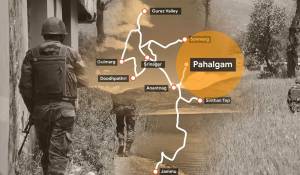
In 2022, a fundraising network managed by Tajik national Shamil Hukumatov leveraged the TRC20 blockchain to raise an estimated US$2 million in USDT before Binance, alerted by on-chain analysis, facilitated his arrest. Subsequent intelligence linked funds for the March 2024 Moscow attack to a newly created USDT wallet that saw an influx of ~$5,200 in the week prior, with a ~$2,525 withdrawal executed on the day of the attack via the ByBit Virtual Asset Service Provider (VASP) . Further forensic analysis connected this network to a Turkish cell involved in the January 2024 Istanbul church attack. These data points confirm ISKP's strategic pivot from compromised physical value transfer methods to a resilient, virtual asset-based financing model, representing a significant challenge to legacy Counter-Terrorism Financing (CTF) methodologies.
The 'Push' Factors
The collection of ISKP funding traditionally relied on the high-signature physical assets that could be interdicted in numerous levels. The hawala networks of the organization, even though being informal and having a trust-based structure, produced traces of human intelligence due to the need of face-to-face coordination and moving cash. The presence of local extortion rings on Afghan business and the cross-border traders offered a ground level vulnerabilities that could be exploited by the Taliban, in terms of counter-intelligence operations and infiltration by informants. The logistics of the laundering of opium and mineral extraction was complicated and necessitated long transportation routes and chain networks that put the surface of the organization under attack which was growing exponentially.
The systematic degradation of these channels resulted from coordinated multi-domain counter-operations between 2021-2024. Intelligence assessments indicate that over 200 hawala operators across the Afghanistan-Pakistan corridor have been neutralized through kinetic operations or legal designation since 2021 , while local extortion rackets previously generating an estimated $50–75 million annually have been disrupted by Taliban counter-intelligence operations targeting ISKP revenue collection cells.
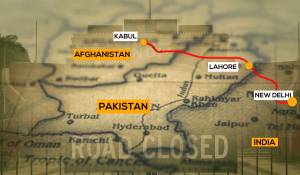
Concurrently, US-led CTF sanctions and designations systematically targeted key financial facilitators, including the July 2023 OFAC designation of ISKP operatives and their associated USDT addresses. Critical cross-border interdiction by regional states, particularly Pakistan's enhanced monitoring of the Durand Line and Tajikistan's implementation of FATF-compliant transaction reporting thresholds, dismantled traditional support and transit corridors. Intelligence suggests hawala operators processed approximately $2-5 billion annually through Pakistan alone, with terrorism financing representing an estimated 5% of total flows—creating substantial collateral enforcement targeting*.
Faced with mounting pressure, ISKP had no choice but to find alternative financing channels that could bypass traditional financial infrastructure monitoring and interdiction capabilities.
Technical Analysis of ISKP's Digital Financing Modus Operandi
Blockchain Architecture Exploitation
The on-chain toolkit of ISKP presents advanced knowledge of the vulnerability of blockchain architecture and the possibility of regulatory arbitrage. The adoption of the TRC20 standard in USDT transfers by the organization takes advantage of sub-cent Tron gas charges, as well as 2,000+ transactions per second (TPS) throughput upper bounds, under ideal conditions, facilitating P2P transfers. Although a transfer on TRC20 USDT is normally charged between 3 to 7 dollars in relation to the energy positioning of a wallet, it is still quite cheap compared to the charges incurred on a Bitcoin transfer when there is network congestion. This architectural design is quite opposite to the UTXO (Unspent transaction output) architecture of Bitcoin in which all transaction inputs are always connected to the past outputs. The obfuscation is far better offered under the account-based model at TRC20 than under the transparent transaction graph of Bitcoin, but there is privacy improvement technology available in Bitcoin, such as the CoinJoin mixing services.
Privacy Coin Adoption Strategy
ISKP Digital Terror Financing: Step-by-Step Process Analysis
The spreading use of privacy coins by ISKP, and more specifically Monero (XMR), is a strategic development as a result of improved surveillance mitigations. In Monero, the ring signature mechanism selects picks 15 additional transaction outputs (of the total number of target outputs) randomly on a decoys, which create a statistical anonymity group that the competitive blockchain forensic methods cannot break. The introduction of stealth addresses creates a unique address used in a one-time manner per transaction by using a dual-key (spend and view key) system and breaks the fundamental chain of custody that forensic tools are familiar with. Ring Confidential Transactions (Ring CT) further obstruct the visibility of the amount of transaction by use of cryptographic commitments, such that despite the identification of the transaction, their economic impact remains invisible.

Operational Security Protocols
The operational security of ISKP is demonstrating a growing sophistication in the practice of fund obfuscation and custody. Centralized mixers and tumblers are important infrastructure of non-custodial (unhosted) wallets, taking deposits and returning the same amount to new addresses after random delays, removing money entirely out of the regulated VASP ecosystem. This takes advantage of the regulatory disparity between custodial services, which have Know Your Customer (KYC) and Anti-Money Laundering (AML) regulations, and self-custody solutions, which are not regulated by institutions. Intelligence shows that ISKP financial facilitators are highly disciplined in their operations with compartmentalized wallets and each cell is in charge of discrete clusters of addresses to mitigate exposure in case a cell is compromised.
VASP-to-Hawala Conversion Process

Figure 2 VASP-to-Hawala Off-ramp Process: GNET Monero Analysis | GNET Combat Finance | GNET Research | CTC Financial Future | MPIL Research.
The hawala-to-vasp off-ramp is the most serious vulnerability of ISKP and their most advanced operational capability. A standard transaction “kill chain” starts with an anonymous P2P donation gathered with Voice of Khorasan campaigns and social media requesting. Layering is done via centralized mixers or privacy coin conversion, and consolidation is done via private wallet clusters managed by regional financial facilitators. The critical conversion stage takes advantage of VASPs that have poor KYC/AML policies, especially exchanges that are located in a jurisdiction with weak regulatory oversight or enforcement abilities. Turkish-based VASPs have become the liquidation points of choice, and there is intelligence showing that funds are flowing in and out routinely by ByBit, Kraken, and local exchanges with lax compliance regimes. The last off-chain conversion exploits existing hawala systems in Turkey, Central Asia and the Afghan border areas where the cryptocurrency proceeds are exchanged to local currency and dispersed via long standing value transfer systems that disrupt forensic traceability.
Threat Assessment

Figure 3 ISKP Cryptocurrency Timeline 2022-2024: Major Incidents and Enforcement Actions
Current Threat Scale
The fundamental threat line is the existence of regulatory and technical gaps in between the regulated VASP ecosystem and the decentralized P2P technologies that it uses. This hybrid system engineered a durable, low-signature financing channel, which surpasses the anonymity of privacy-oriented cryptocurrencies associated with the liquidity of regulated exchange infrastructure. The monthly cryptocurrency revenues of the organization, ranging between $25,000-$100,000 depending on the recorded transfer of funds, are enough to fund various high-impact external activities.
Recent Attack Correlations
According to the TRM Labs analysis, ISKP has been associated with a number of attacks, unsuccessful plots, and arrests in other countries like Russia, Turkey, Iran, Germany, France, Austria, Italy and the United States during the 2024. Some of its most notable events featured cryptocurrency at the center, such as the March 2024 Moscow attack, which was partially funded by cryptocurrency, and the arrest of a German after transferring USD 1,700 of cryptocurrency to ISKP and attempting to be hired as a security guard in one of the major European soccer championships.
Counter-Strategy Implementation Framework

Figure 4 Counter Strategy Implementation Framework
Mandatory international implementation of the FATF Travel Rule (Recommendation 16) would de-anonymize VASP-to-VASP transfers by requiring originator and beneficiary information sharing for transactions exceeding threshold amounts.

The use of AI-based heuristic analysis systems would mark down red flags on suspicious patterns of on-chain activity, such as "peel chain" obfuscation where large sums of money are split into smaller transfers, the creation of structured deposits to evade KYC requirements, and the use of certain specific VASP corridors frequented by criminals.
Improved Intelligence-Share arrangements between government CTF services and commercial blockchain analytics technologies, such as TRM Labs and Chainalysis, would involve active threat detection and disruption by using proprietary databank of illegal addresses and transaction patterns.
Technical indicators that should be recommended to be used in the threat-hunting include the machine learning model training parameters which are data-mined to yield more than 90% confidence intervals in detecting the presence of privacy coin mixing patterns, the automated marking of TRC20 USDT transactions over $1,000 transparency moved between the Bitcoin, Ethereum, and Tron networks in 72 hour windows, and cross-blockchain correlation analysis to determine address clusters that move currency across each of the Bitcoin, Ethereum, and Tron networks.
VASPs are advised to adopt more rigorous due diligence when handling customers using Turkish, Central Asian, or Afghan banking correspondent relationships and scrutiny when it comes to the rapid liquidation patterns of over $5,000 in 24-hour periods.
The documented evidence of ISKP's sophisticated cryptocurrency adoption highlight the urgency of coordinated international response mechanisms to address both technical vulnerabilities of the blockchain infrastructure and regulatory loopholes available to terrorist actors. While stablecoins continue to be the currency of choice for terrorist financing organizations, Monero and other privacy-focused cryptocurrencies seem to have gained interest in recent times, making it increasingly challenging for traditional CTF methodology and requiring urgent change in strategies. Success depends on immediate implementation of enhanced VASP monitoring protocols, accelerated international coordination on FATF standard implementation, and sustained commitment to next generation blockchain forensics development programs. The window for effective intervention is narrowing rapidly decisive action is required to prevent ISKP's financing methodology from becoming permanently embedded in the global cryptocurrency ecosystem.
These recommendations are author’s original ideas, created specifically to address the threats that he found during his research. He designed these solutions and set these specific limits himself to target the loopholes that criminals are currently using.
1) Pakistan Finance Minister Shaukat Aziz, a former executive vice-president of Citibank in New York, said $2 billion to $5 billion moved through the “Hawala system annually in Pakistan”, more than the amount of foreign transfers through the country’s banking system.
Disclaimer: These recommendations are original ideas of the author, created specifically to address the threats that he found during his research. He designed these solutions and set these specific limits himself to target the loopholes that criminals are currently using. Views expressed by the writer in this blog are his own and do not necessarily reflect The Khorasan Diary's policy.