Jihadist channels affiliated with the Pakistani Taliban have released a purported audio message from Hafiz Gul Bahadur, a Key leader of his own faction of Pakistani Taliban. The message, reportedly the first of its kind, contains a set of instructions to his fighters, directing them to adhere to rules and escalate attacks in Pakistan, primarily against the Pakistani military.
In the audio, released in a Waziristani Pashto accent, Hafiz Gul Bahadur can be heard strongly instructing his fighters to intensify attacks in Pakistan, in a significant way. “Make every operational activity tenfold from now on,” he says.
For nearly two decades, Hafiz Gul Bahadur, whom the Pakistani government claims is currently hiding in Afghanistan, has been a formidable and elusive figure, consistently evading death and capture. He has successfully dodged multiple attempts by the CIA's extensive drone campaign in his hometown of North Waziristan, as well as operations conducted by the Pakistani military within the Pakistani tribal region and across the border in Afghanistan. While US drone strikes have successfully decimated rest of the Pakistani Taliban's entire top leadership, like Baitullah Mehsud, Hakimullah Mehsud and Mullah Fazlullah, Bahadur remains the sole survivor. Even Molvi Nazeer, a key leader of his own faction, fell to a US drone strike in South Waziristan, yet Bahadur endures.
He has been declared dead multiple times previously, most recently in October 2025 in Pakistani strikes in the Khost and Paktika provinces of Afghanistan. However, sources close to his faction have refuted claims of his death in these strikes. Some suggested that one of his uncle's houses was targeted, where he often visited, but he was not present during the attack.
A major hurdle in confirming his fate has always been the non-availability of verified photographs. In several instances, reports of his death were accompanied by images of Wali-ur-Rehman Mehsud, a former deputy chief of the TTP, rather than him. Mehsud was killed in a US drone strike in North Waziristan in 2013. Several Pakistani officials who have met him in person in the past have also denied having any photographs of him.
In the statement, he has also directed them not to include foreign fighters in their ranks, particularly Afghans and other foreign nationals in general. “You are already in the thousands now and don't depend on foreign fighters to sustain Jihad against Pakistan military,” he can be heard saying.
He also emphasizes that real change for the implementation of Sharia in Pakistan can only be brought through Jihad, not through chanting slogans or holding protests – an apparent reference to certain political parties and civil rights movements active in the region.
Another important directive he has communicated to the fighters in the audio message, which lasts approximately 25 minutes, pertains to the use of social media and mobile phones. "I strictly instruct you to refrain from using Facebook and the mobile phones you carry. Pakistani military can track you through these and then target you using drones and other means. Consider your cell phone as your greatest enemy. Do not give them any reason to harm you. If it becomes absolutely essential, then designate one individual to manage social media and similar activities.”
He claims that his faction controls 50 percent of the land in North Waziristan, and government authority is confined only to the centers of towns. “They have bazaars, we have villages and surroundings; they control roads, we control mountains,” he boasts.
He also warns the fighters to avoid drug usage and prevent drugs from making their way into “Mujahideen camps”. He instructs them not to harass locals, stop kidnapping people for ransom and refrain from forcing locals to provide food and shelter. “Anyone violating these warnings will be dealt with severe punishments,” he warns.
Following his 2006 peace deal with the Pakistan government, Hafiz Gul Bahadur and his faction were viewed in Pakistan as “good Taliban” for years, as they concentrated their efforts on fighting across the border in Afghanistan against Western and Afghan forces, rather than targeting Pakistan. The 2014 Operation Zarb-e-Azb, a comprehensive military operation against various jihadist groups in North Waziristan, including the TTP, Al-Qaeda, Hafiz Gul Bahadur's faction, the Islamic Movement of Uzbekistan and even Haqqani network, ultimately led to Hafiz Gul Bahadur turning against Pakistan.
In addition to instructing his fighters, a primary reason for releasing his audio message is to assert that he is still alive.
Unlike TTP leaders, who frequently give public interviews to the media, Hafiz Gul Bahadur is known for maintaining a highly private profile and rarely, if ever, grants interviews to the media, even including the jihadist media. His typical mode of communication is through written statements released via his spokespersons, which makes the emergence of this audio statement both rare and significant.
Last year, this scribe reached out to few key members of his faction, who initially expressed willingness in setting up an interview with him. However, they subsequently sent a message indicating that it was not feasible at the moment and that they would contact in the future when situation is more favorable.
Pakistan has, at least on two occasions – in November 2023 and July 2024 – formally demanded the Taliban-led Afghan interim government to extradite Hafiz Gul Bahadur from Afghanistan, following attacks against key security installations in Pakistan claimed by his faction.
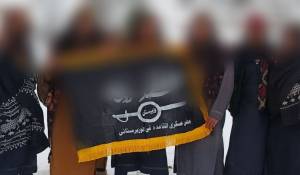
In recent years, the Hafiz Gul Bahadur faction has expanded its presence and formed new alliances. In April 2025, the Ittehad ul Mujahideen (IMP) alliance was established under the leadership of Hafiz Gul Bahadur, following nearly a year of concerted efforts between certain Pakistani Taliban factions and Al-Qaida in the Indian Subcontinent (AQIS). Since its establishment, the IMP has carried out several attacks and major suicide bombings in North Waziristan and Bannu districts of Khyber Pakhtunkhwa utilizing manpower provided by Hafiz Gul Bahadur's faction and its commanders. Currently, Bahadur's faction alone operates four suicide bombers’ training camps, in addition to receiving manpower support from its affiliated sub-factions and allies within the IMP.
In the past four years, Bahadur's group has carried out more suicide attacks in Pakistan than the TTP, even though the TTP has a larger force and more widespread presence. The most recent complex attack claimed by his faction took place on December 19, 2025, in the Boya region of North Waziristan district, where four suicide bombers targeted a security forces camp, resulting in the deaths of four security personnel and injuries to seven others; all four attackers were also killed.
The establishment of the IMP alliance, coupled with AQIS supervision, has empowered operationally dormant Pakistani Taliban groups. The Lashkar-e-Islam (LeI) group, which struggled to sustain its militant activities between 2020 and 2024, has intensified its attacks in Khyber tribal district, adjacent to the provincial capital Peshawar, including carrying out its first suicide attack in August 2025. Similarly, the TTP faction Jamaatul Ahrar (JuA) has maintained operational and tactical alliances with LeI and Hafiz Gul Bahadur's group in Khyber tribal district, thereby gaining more influence within the militant landscape.
By establishing the Inqilab-e-Islami Pakistan (IIP) group and joining the IMP, AQIS has re-established its operational presence in Pakistan's militant landscape, shifting from a primarily propaganda-focused approach over the years. For Hafiz Gul Bahadur, the alliance has provided a revamped media strategy and narrative framing, enabling him to streamline his messaging, attract recruits, and expand his operational areas.
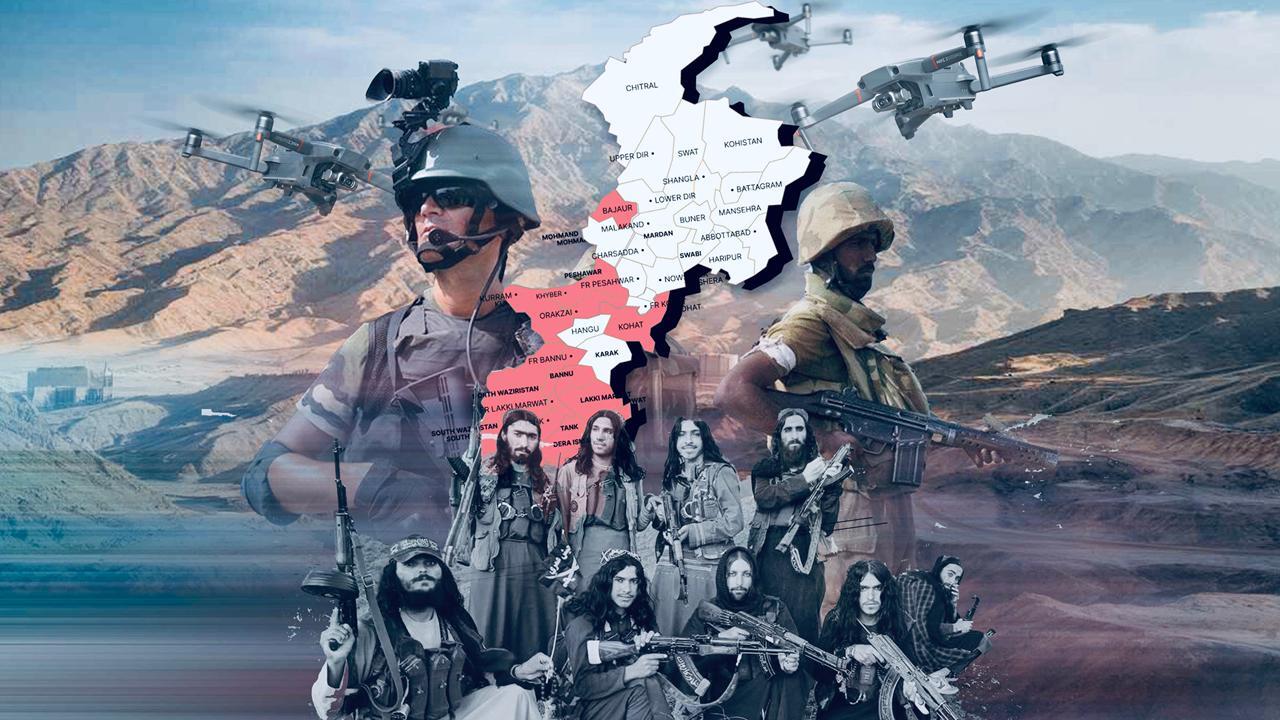
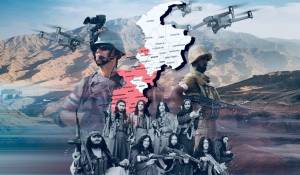
Since last year, Bahadur faction and its allied IMP, have been conducting extensive quadcopter attacks against security personnel and installations, officially taking responsibility for such attacks. The intensity and scale of these attacks are alarming, as evident from the statistics presented by Lieutenant General Ahmed Sharif Chaudhry, Director General of Inter-Services Public Relations (ISPR), at a media briefing in Rawalpindi on Tuesday, while presenting a review of Pakistan's counter-terrorism measures in 2025. He stated that militants had executed a total of 410 armed quadcopter attacks in Khyber Pakhtunkhwa in 2025.